Watch Movement Types Explained: Automatic vs Mechanical vs Quartz
Watch Movement Types Explained: Automatic vs Mechanical vs Quartz
When buying a watch, one of the most important factors to consider is the movement.
The movement is the internal mechanism that powers the watch and controls how it keeps time.
There are three main types of watch movements:
- Automatic
- Mechanical (manual)
- Quartz
Each type offers different advantages in terms of accuracy, convenience, and craftsmanship.
If you are new to watches, understanding these differences will help you choose the right watch for your needs.
What Is a Watch Movement?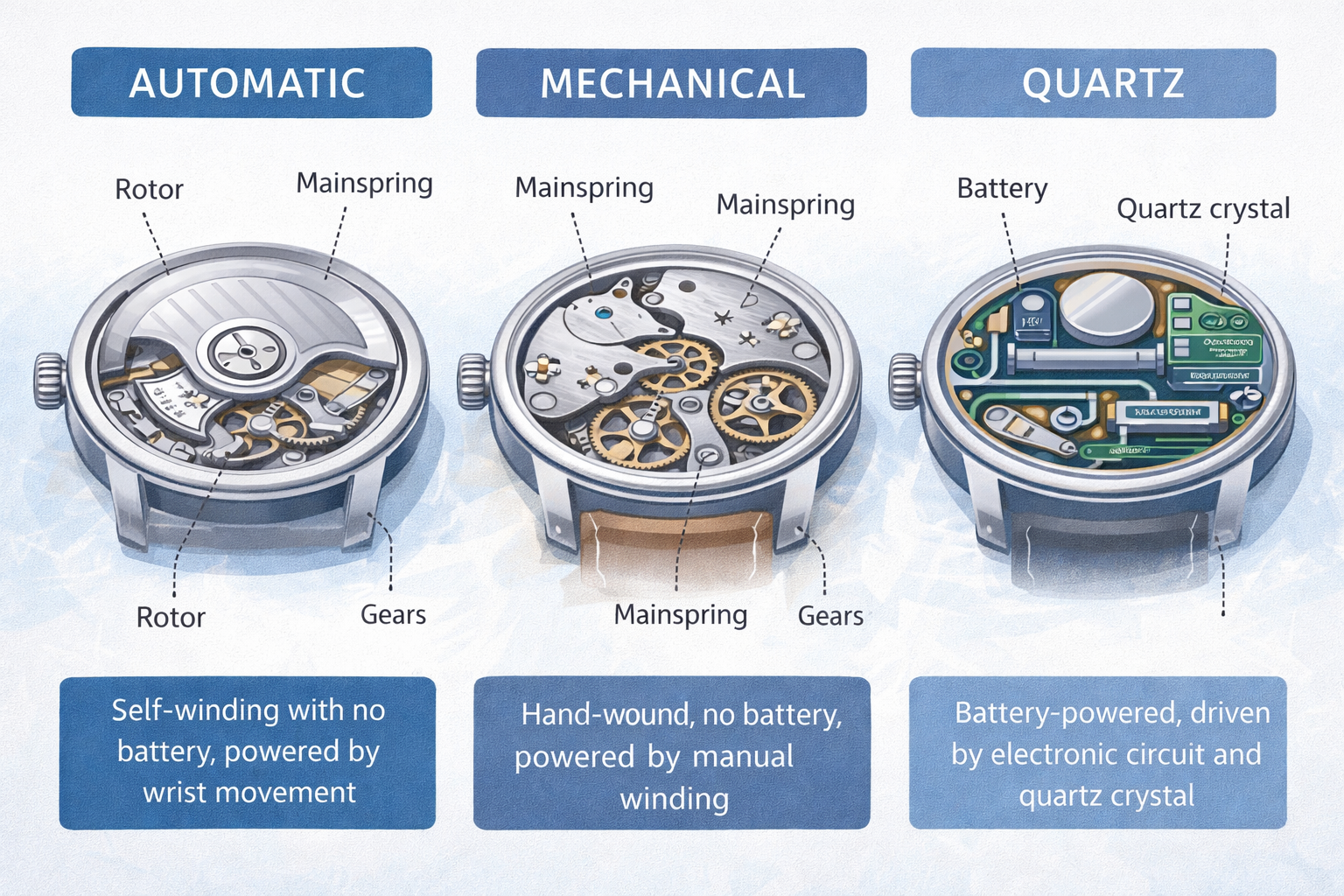
A watch movement is the internal system that drives the hands of a watch.
It controls:
- Timekeeping accuracy
- Power source
- Maintenance requirements
Different movements use different technologies, ranging from traditional mechanical systems to modern battery-powered designs.
Automatic Movement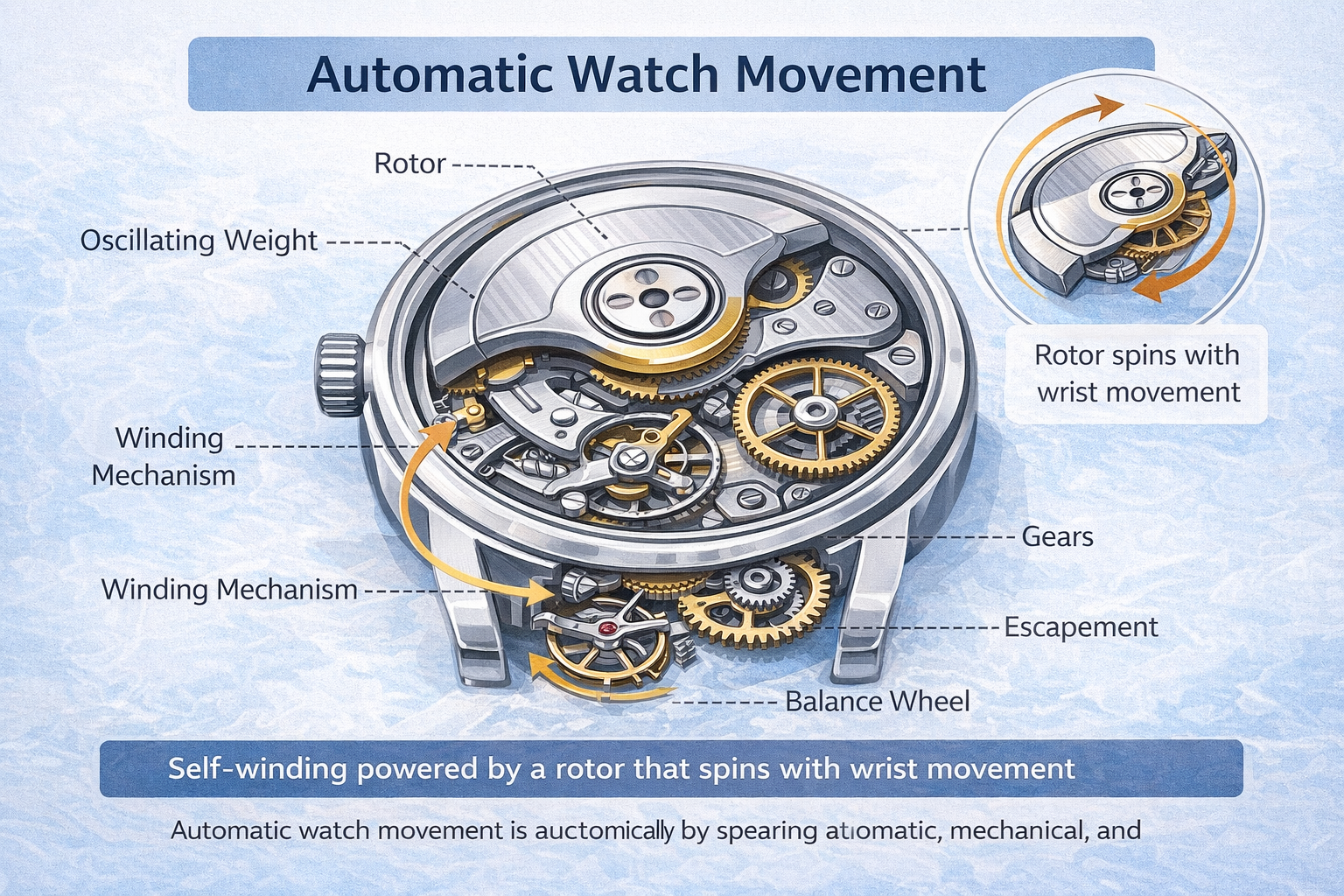
Automatic watches are powered by wrist movement.
Inside the watch, a rotor spins as you move your wrist, winding the mainspring and storing energy.
If you want to understand the mechanism in detail, read:
👉 How Automatic Watches Work: Complete Beginner Guide
Advantages of Automatic Watches
- No battery required
- Smooth sweeping second hand
- Traditional craftsmanship
Disadvantages
- Less accurate than quartz
- Requires regular wear or winding
Power Reserve
Automatic watches store energy in the mainspring.
If you want to understand how long they run, see:
👉 Watch Power Reserve Explained: How It Works and Why It Matters
Mechanical (Manual) Movement
Mechanical watches are similar to automatic watches but require manual winding.
You need to turn the crown regularly to keep the watch running.
If you want a detailed comparison, read:
👉 Automatic Watch vs Mechanical Watch: What's the Difference?
Advantages
- Traditional watchmaking
- Slimmer design
- Collector appeal
Disadvantages
- Requires daily winding
- Less convenient
Quartz Movement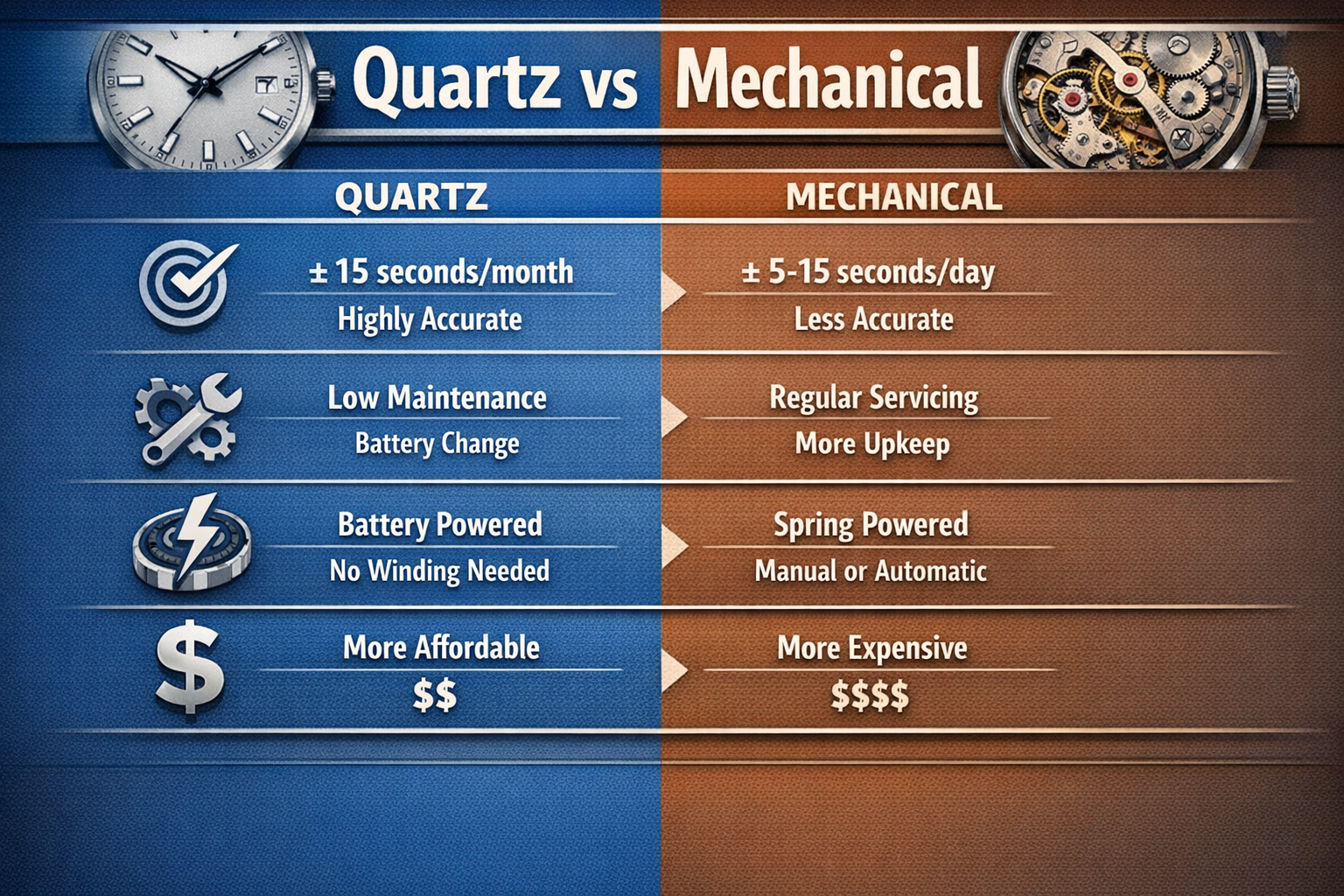
Quartz watches are powered by a battery.
They use a quartz crystal oscillator to keep time, which makes them highly accurate.
If you're comparing quartz with automatic watches, see:
👉 Automatic vs Quartz Watches: Which One Is Better for Everyday Wear
Advantages
- Extremely accurate
- Low maintenance
- Affordable
Disadvantages
- Requires battery replacement
- Less traditional appeal
Key Differences Between Movement Types
| Feature | Automatic | Mechanical | Quartz |
|---|---|---|---|
| Power Source | Wrist movement | Manual winding | Battery |
| Accuracy | Medium | Medium | High |
| Maintenance | Moderate | Moderate | Low |
| Convenience | High | Low | Very High |
Which Movement Is Best for You?
Choosing the right movement depends on your lifestyle.
For Everyday Wear
If you want convenience and comfort:
👉 Best Watches for Everyday Wear: Complete Buying Guide
Quartz or automatic watches are usually the best choice.
For Budget Buyers
If you want value for money:
👉 Best Automatic Watch Under $500: Complete Buying Guide
For Durability
If you need a strong and reliable watch:
👉 Best Dive Watches: Complete Guide for Beginners
For Comfort and Fit
Movement type can affect size and thickness.
👉 Watch Case Size Guide: How to Choose the Right Watch Size
For Materials and Build Quality
Materials also affect performance and durability.
👉 Watch Materials Guide: Stainless Steel vs Sapphire vs Ceramic
Does Movement Affect Watch Size?
Yes.
- Automatic watches are usually thicker
- Quartz watches are thinner
- Mechanical watches are often slim
Movement design directly impacts case thickness and comfort.
FAQ
What is the best watch movement?
There is no single best movement. Quartz is best for accuracy, while automatic and mechanical are valued for craftsmanship.
Are automatic watches better than quartz?
Automatic watches offer traditional appeal, while quartz watches are more accurate and convenient.
Do mechanical watches last longer?
With proper maintenance, both mechanical and automatic watches can last for decades.
Which movement is most accurate?
Quartz watches are the most accurate.
Are automatic watches worth it?
Yes, especially for people who appreciate mechanical craftsmanship.