Watch Case Size Guide: How to Choose the Right Watch Size
Watch Case Size Guide: How to Choose the Right Watch Size
Choosing the right watch case size is one of the most important factors when buying a watch. A watch that is too large may feel uncomfortable, while a watch that is too small may not look balanced on your wrist.
Whether you are buying your first watch or upgrading your collection, understanding case size will help you make a better decision.
If you're still deciding what type of watch suits daily use, you can also read:
👉 Best Watches for Everyday Wear: Complete Buying Guide
This guide explains how comfort, durability, and design all affect everyday watch choices.
What Is Watch Case Size?
Watch case size refers to the diameter of the watch case, usually measured in millimeters (mm).
It does not include the crown and is measured across the watch face.
Common sizes include:
-
36mm – small and classic
-
38–40mm – balanced everyday size
-
42–44mm – sporty and modern
-
44mm+ – oversized watches
Case size directly affects how the watch looks and feels on your wrist.
How to Choose the Right Watch Size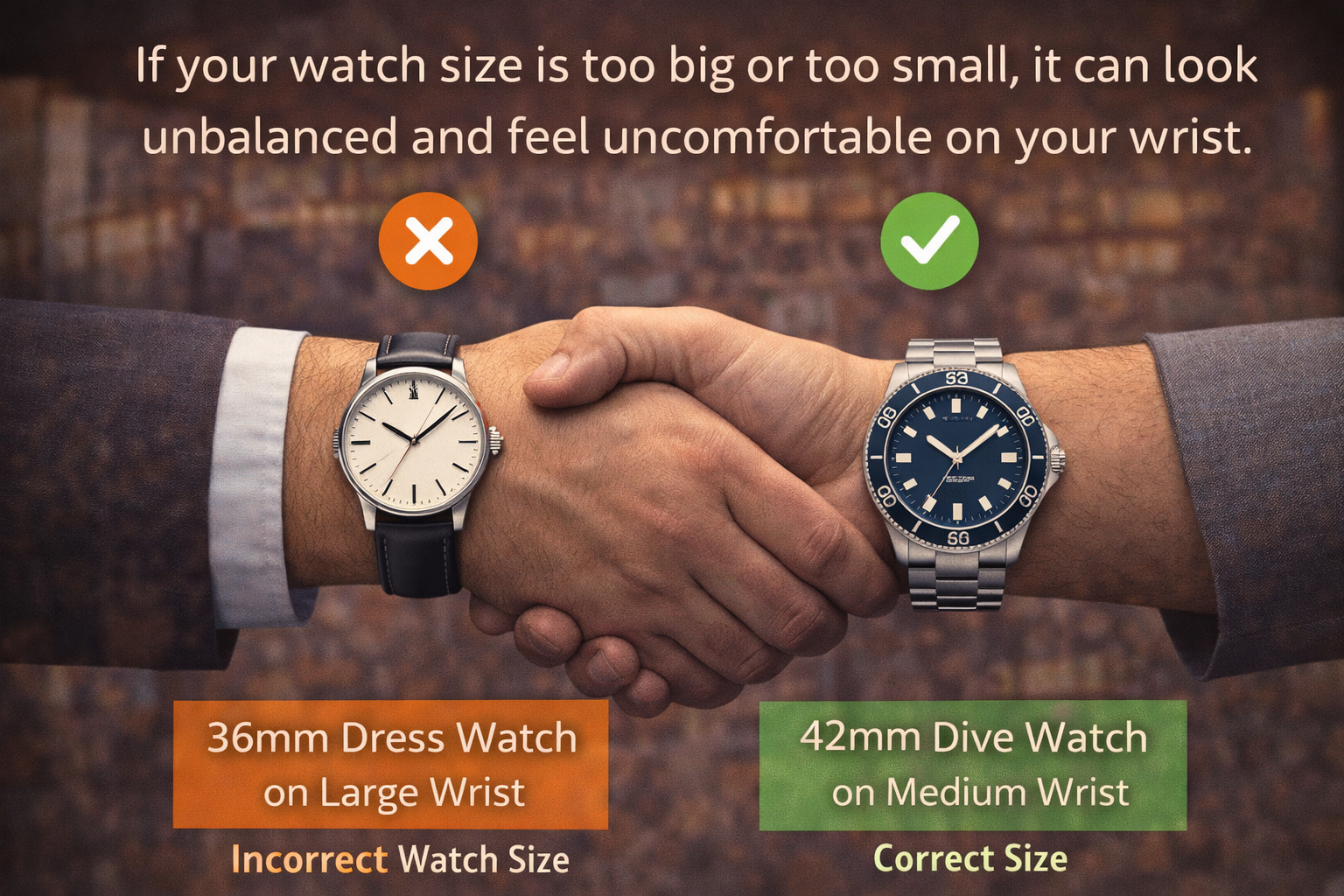
Choosing the right watch size depends mainly on your wrist size and personal style.
Wrist Size Guide
Here is a general guideline:
-
Small wrist (6–6.5 inches): 36–38mm
-
Medium wrist (6.5–7.5 inches): 38–42mm
-
Large wrist (7.5+ inches): 42–44mm
The goal is to find a watch that looks proportionate and feels comfortable.
Lug-to-Lug Distance
The lug-to-lug distance is the measurement from one end of the watch case to the other.
A watch may look too large if the lugs extend beyond your wrist.
This is just as important as case diameter when choosing the right fit.
Case Thickness
Thicker watches feel heavier and look more prominent.
For example:
-
Dress watches → thin and elegant
-
Dive watches → thicker and more durable
If you are interested in durable watches, see:
👉 Best Dive Watches: Complete Guide for Beginners
Dive watches are usually larger and thicker to improve durability and water resistance.
Best Case Size for Different Watch Types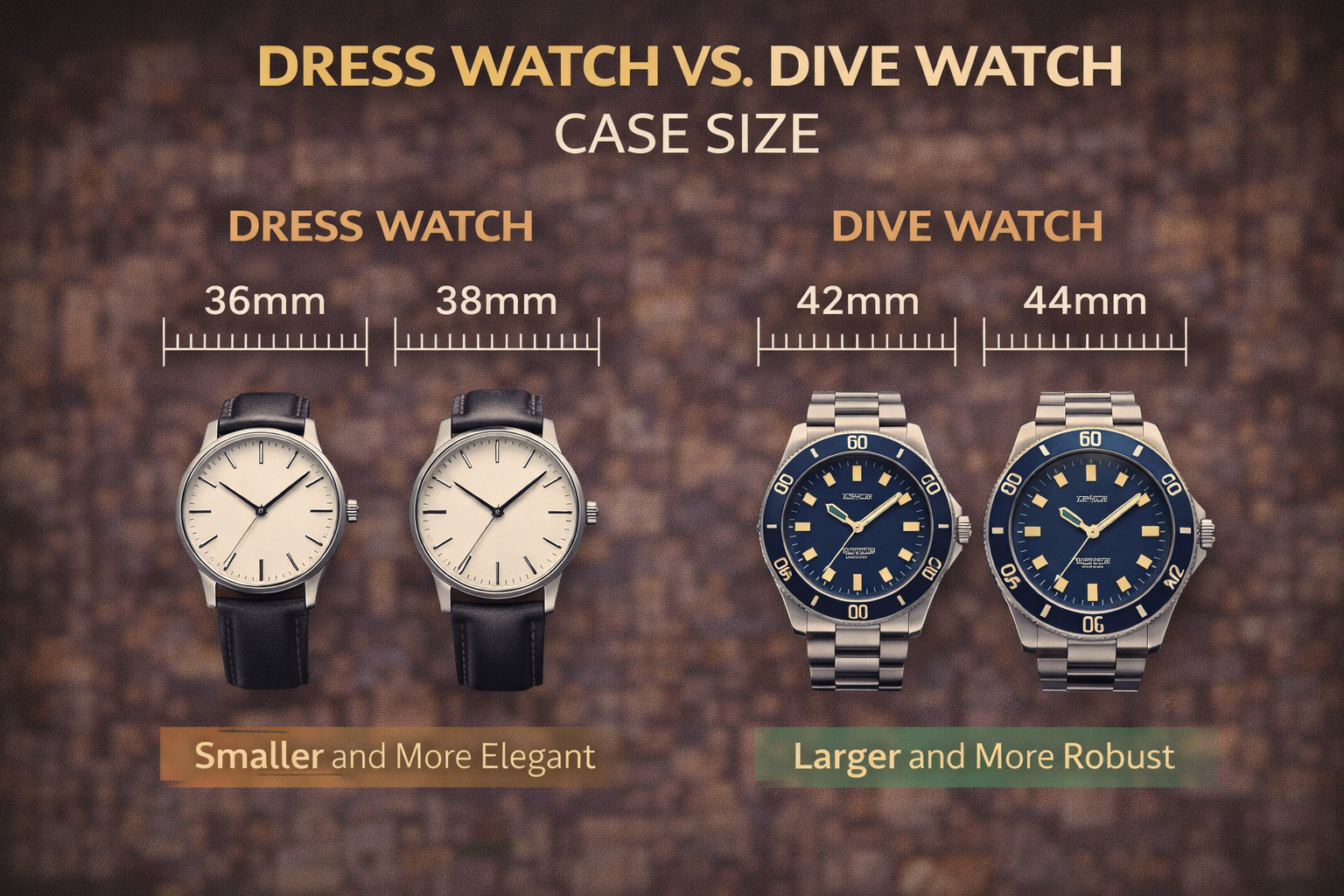
Different watch styles typically use different case sizes.
Dress Watches
-
Usually 36–40mm
-
Thin profile
-
Elegant appearance
Dress watches are designed to fit comfortably under sleeves.
Everyday Watches
-
Typically 38–42mm
-
Balanced design
-
Comfortable for daily use
If you are choosing a watch for everyday use, read:
👉 Best Watches for Everyday Wear: Complete Buying Guide
This guide explains how size, materials, and comfort work together.
Dive Watches
-
Usually 40–44mm
-
Thicker case
-
Highly durable
Dive watches are intentionally larger for better readability underwater.
How Watch Movement Affects Size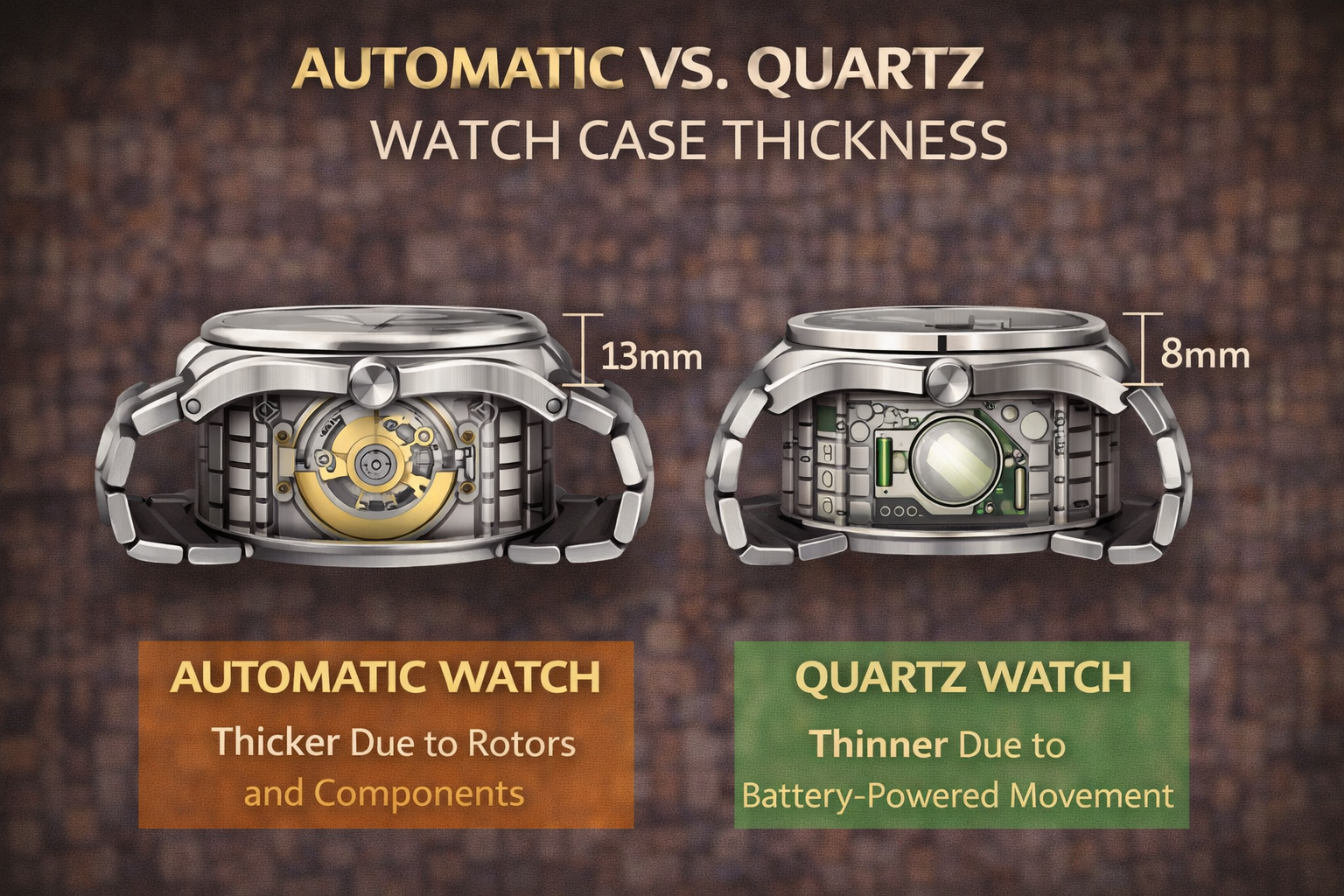
The movement inside a watch can influence its thickness and design.
Automatic Watches
Automatic watches are often thicker because they include a rotor mechanism.
If you want to understand how they work, see:
👉 How Automatic Watches Work: Complete Beginner Guide
This guide explains how the rotor powers the watch through wrist movement.
Quartz Watches
Quartz watches are typically thinner and lighter.
If you are comparing the two types, read:
👉 Automatic vs Quartz Watches: Which One Is Better for Everyday Wear
This article explains the differences in accuracy, maintenance, and design.
Does Bigger Mean Better?
Not necessarily.
Larger watches may:
-
Look bold and sporty
-
Be easier to read
But they can also:
-
Feel heavy
-
Look oversized on smaller wrists
Choosing the right size is about balance, not just trends.
Tips for Choosing the Right Watch Size
Here are some simple tips:
-
Make sure the lugs do not extend beyond your wrist
-
Choose a size that feels comfortable all day
-
Consider your clothing style
-
Try different sizes before buying
If you are buying an automatic watch for the first time, you may also like:
👉 Best Automatic Watch Under $500: Complete Buying Guide
This guide helps you find affordable watches that balance size, design, and performance.
FAQ
What is the most popular watch size?
The most popular size is 40mm, as it suits most wrist sizes.
Is a 44mm watch too big?
It depends on your wrist size. For smaller wrists, it may feel too large.
Should a watch cover your wrist?
No. The watch should sit comfortably without extending beyond your wrist.
Are smaller watches more stylish?
Smaller watches are often considered more classic and timeless.
Do automatic watches feel bigger?
Yes. Automatic watches are usually thicker due to their mechanical movement.