How Automatic Watches Work: Complete Beginner Guide
How Automatic Watches Work: Complete Beginner Guide
Automatic watches are known for their craftsmanship and mechanical engineering. Unlike quartz watches, which rely on batteries, automatic watches are powered by motion.
Inside an automatic watch, small components work together to convert wrist movement into stored energy. This energy keeps the watch running continuously.
If you're new to watches, understanding how automatic movements work will help you choose the right watch and appreciate the engineering behind it.
If you're comparing movement types, you can also read:
👉 Automatic vs Quartz Watches: Which One Is Better for Everyday Wear
This guide explains how automatic watches differ from battery-powered quartz watches in accuracy and maintenance.
What Is an Automatic Watch?
An automatic watch is a self-winding mechanical watch.
Instead of requiring daily manual winding, it uses the natural movement of your wrist to generate power.
Automatic watches are part of the broader category of mechanical watches. If you want to understand how they compare, see:
👉 Automatic Watch vs Mechanical Watch: What's the Difference?
This article explains how manual winding watches differ from automatic movements.
Key Components of an Automatic Watch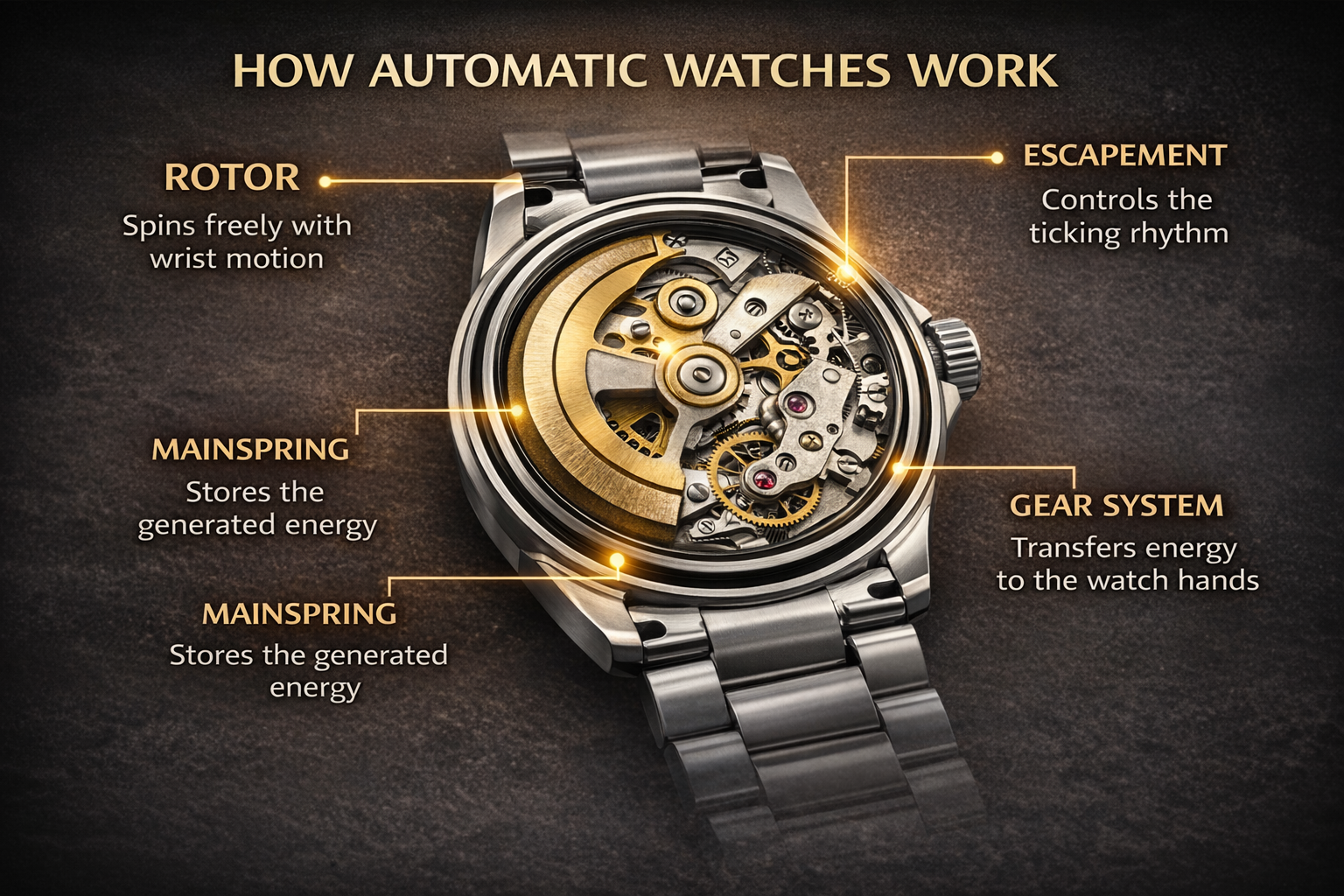
Automatic watches rely on several key components that work together.
Rotor
The rotor is a semicircular metal piece inside the watch.
When your wrist moves, the rotor spins and winds the mainspring.
Key functions:
-
Converts wrist motion into energy
-
Automatically winds the watch
-
Eliminates the need for constant manual winding
Mainspring
The mainspring stores energy generated by the rotor.
Once wound, it slowly releases energy to power the watch.
Most automatic watches have a power reserve of 38 to 48 hours, meaning they can keep running even when not worn for a short time.
Gear Train
The gear train transfers energy from the mainspring to the watch hands.
It controls how fast the:
-
Hour hand
-
Minute hand
-
Second hand
move, ensuring accurate timekeeping.
Escapement
The escapement regulates the release of energy.
It works with the balance wheel to create a consistent ticking rhythm, preventing the watch from releasing all its energy at once.
How Automatic Watches Wind Themselves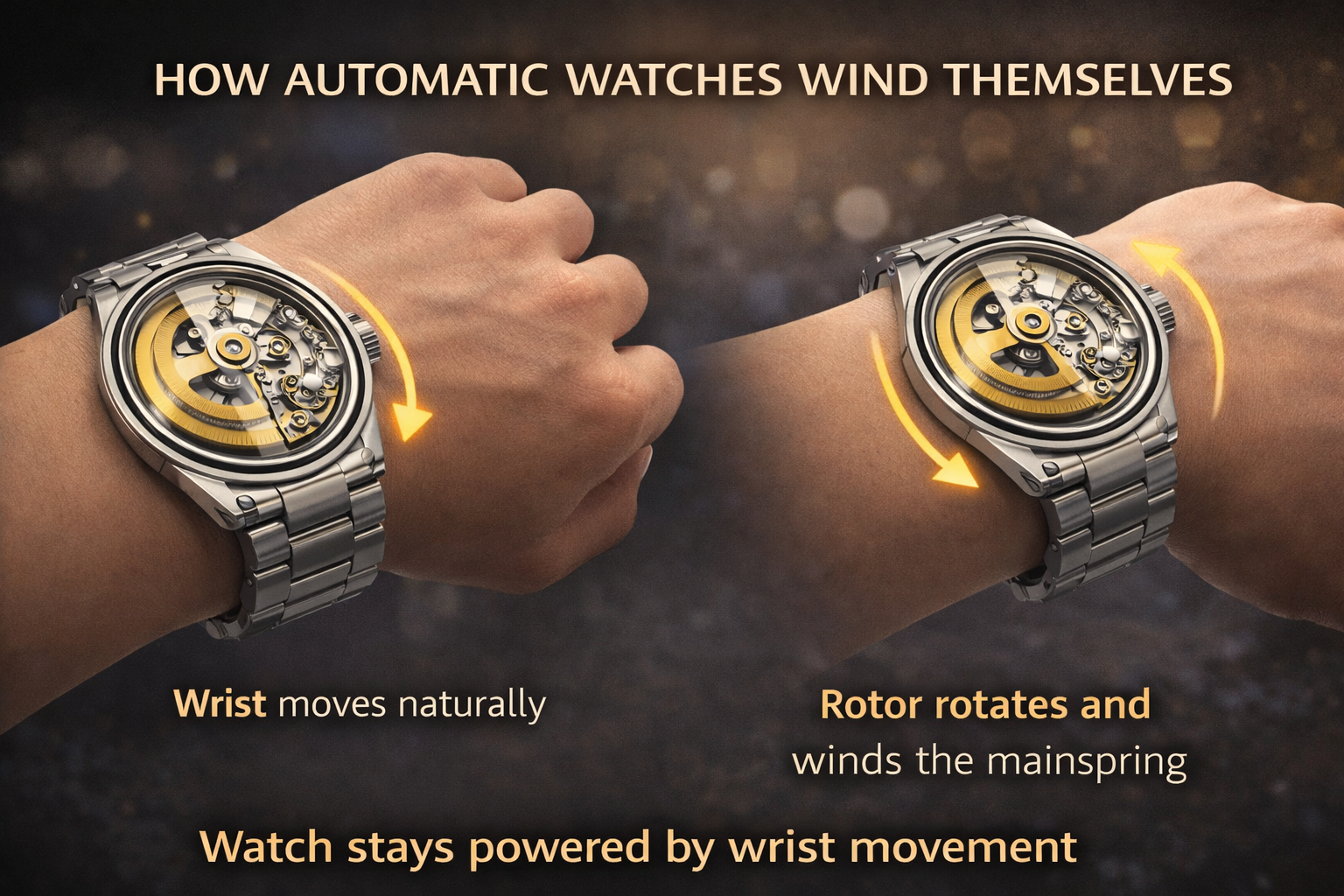
Automatic watches are powered by everyday movement.
As you move your wrist:
-
The rotor rotates
-
The mainspring winds
-
Energy is stored and released gradually
Because of this system, the watch stays powered as long as it is worn regularly.
However, if not worn for a few days, the watch may stop and require manual winding or resetting.
Advantages of Automatic Watches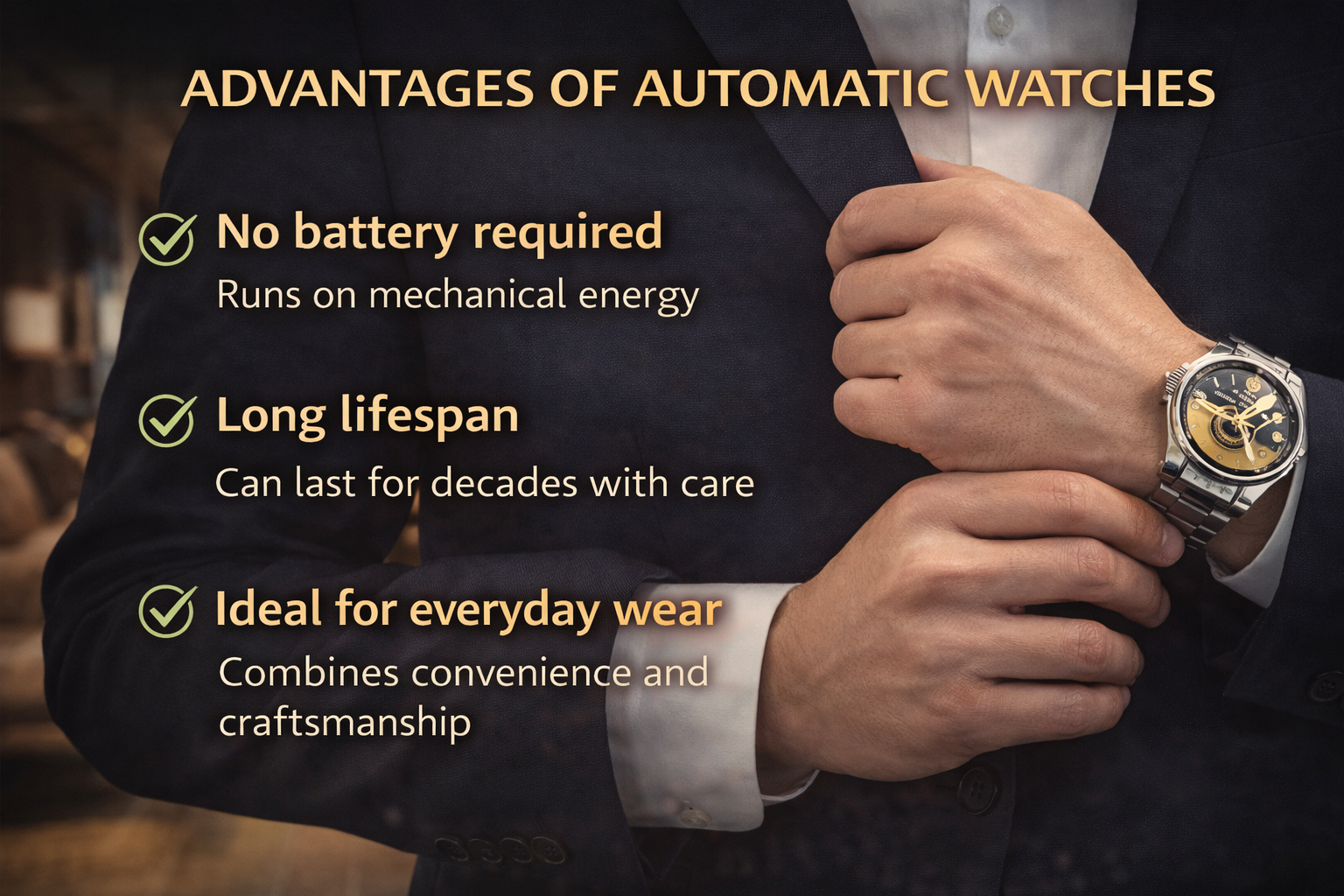
Automatic watches offer several benefits.
No Battery Required
Automatic watches run entirely on mechanical energy.
This makes them appealing for people who prefer traditional engineering over electronic components.
Long Lifespan
With proper care, automatic watches can last for decades.
Many are passed down as long-term personal items.
Smooth Movement
Unlike quartz watches, automatic watches typically have a smooth sweeping second hand, which many people find visually appealing.
Suitable for Everyday Wear
Automatic watches are commonly used as daily watches.
If you're looking for a watch you can wear regularly, check out:
👉 Best Watches for Everyday Wear: Complete Buying Guide
This guide explains how to choose a watch that balances comfort, durability, and style.
Are Automatic Watches Good for Beginners?
Yes. Automatic watches are a great choice for beginners who want to explore mechanical watches.
They offer:
-
A balance of craftsmanship and usability
-
No need for batteries
-
Long-term durability
If you're starting out and want a budget-friendly option, you may also like:
👉 Best Automatic Watch Under $500: Complete Buying Guide
This guide helps you choose a reliable automatic watch at an affordable price.
Are Automatic Watches Durable?
Automatic watches are generally durable, especially those designed for active use.
For example, dive watches are built to handle tough conditions, including water pressure and impact.
👉 Best Dive Watches: Complete Guide for Beginners
Dive watches are known for their strong construction, water resistance, and excellent readability.
How to Maintain an Automatic Watch
To keep your watch running smoothly:
-
Wear it regularly
-
Avoid strong impacts
-
Keep it away from strong magnets
-
Service it every 3–5 years
Regular maintenance helps preserve accuracy and extend lifespan.
FAQ
Do automatic watches need batteries?
No. Automatic watches use mechanical energy generated from wrist movement.
How long can an automatic watch run without wearing it?
Most automatic watches run for about 40 hours without being worn.
Can you manually wind an automatic watch?
Yes. Most automatic watches allow manual winding through the crown.
Are automatic watches accurate?
Automatic watches are less accurate than quartz watches but still reliable for everyday use.
Are automatic watches good for daily wear?
Yes. They are widely used as everyday watches due to their durability and convenience.