Automatic vs Quartz Watches: Which One Is Better for Everyday Use?
Automatic vs Quartz Watches: Which One Should You Choose?
Introduction
Wristwatches come in many different styles, but most modern watches use one of two movement types: automatic or quartz. These two technologies power the watch in very different ways, and each offers its own advantages.
Automatic watches rely on mechanical engineering and the movement of the wearer’s wrist to generate power. Quartz watches, on the other hand, use a battery and electronic oscillator to keep time.
Understanding the difference between these two types of watches can help you make a better decision when choosing a watch for everyday use.
In this guide, we compare automatic and quartz watches in terms of design, accuracy, durability, and long-term maintenance.
Review: Automatic vs Quartz Watch Technology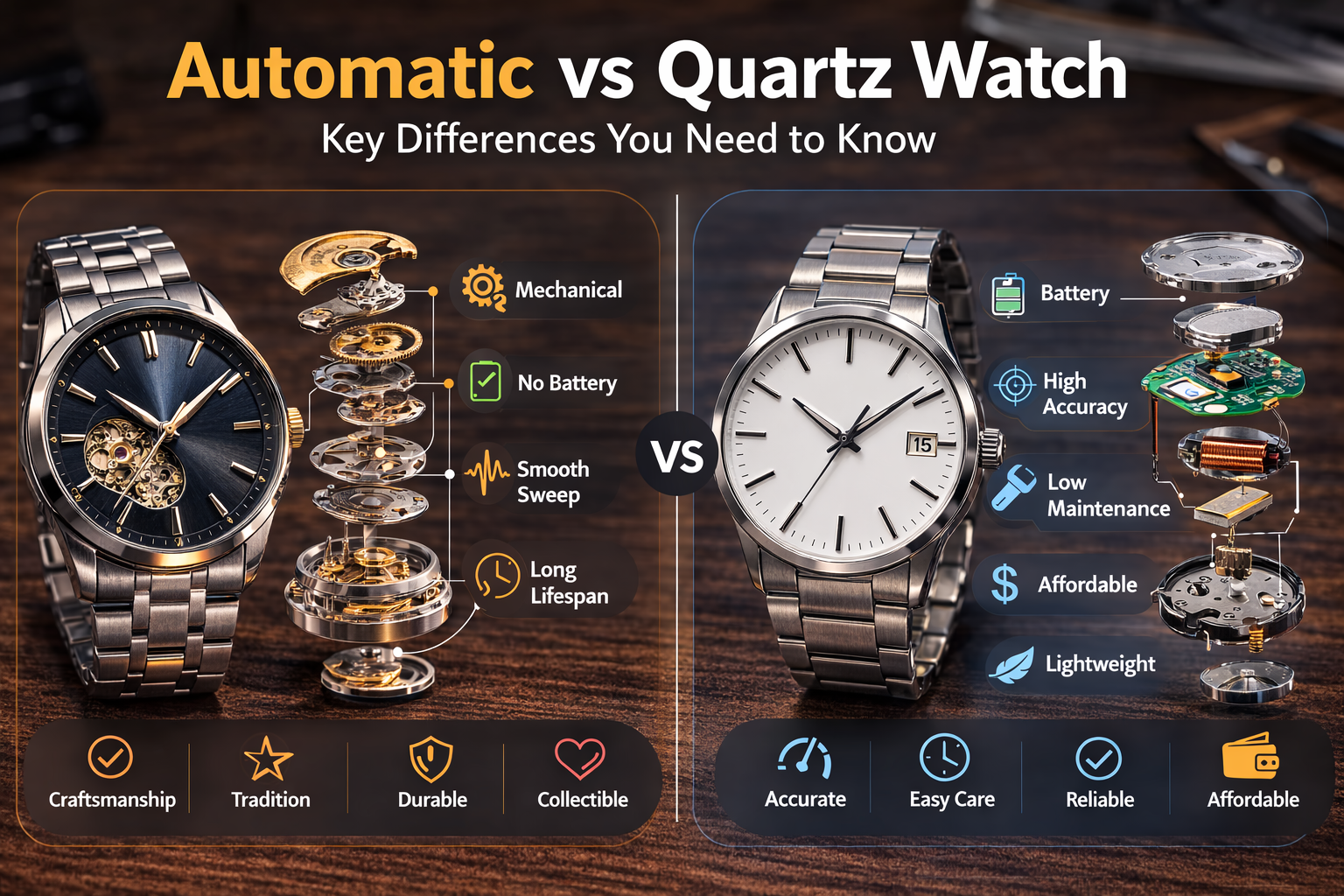
What Is an Automatic Watch?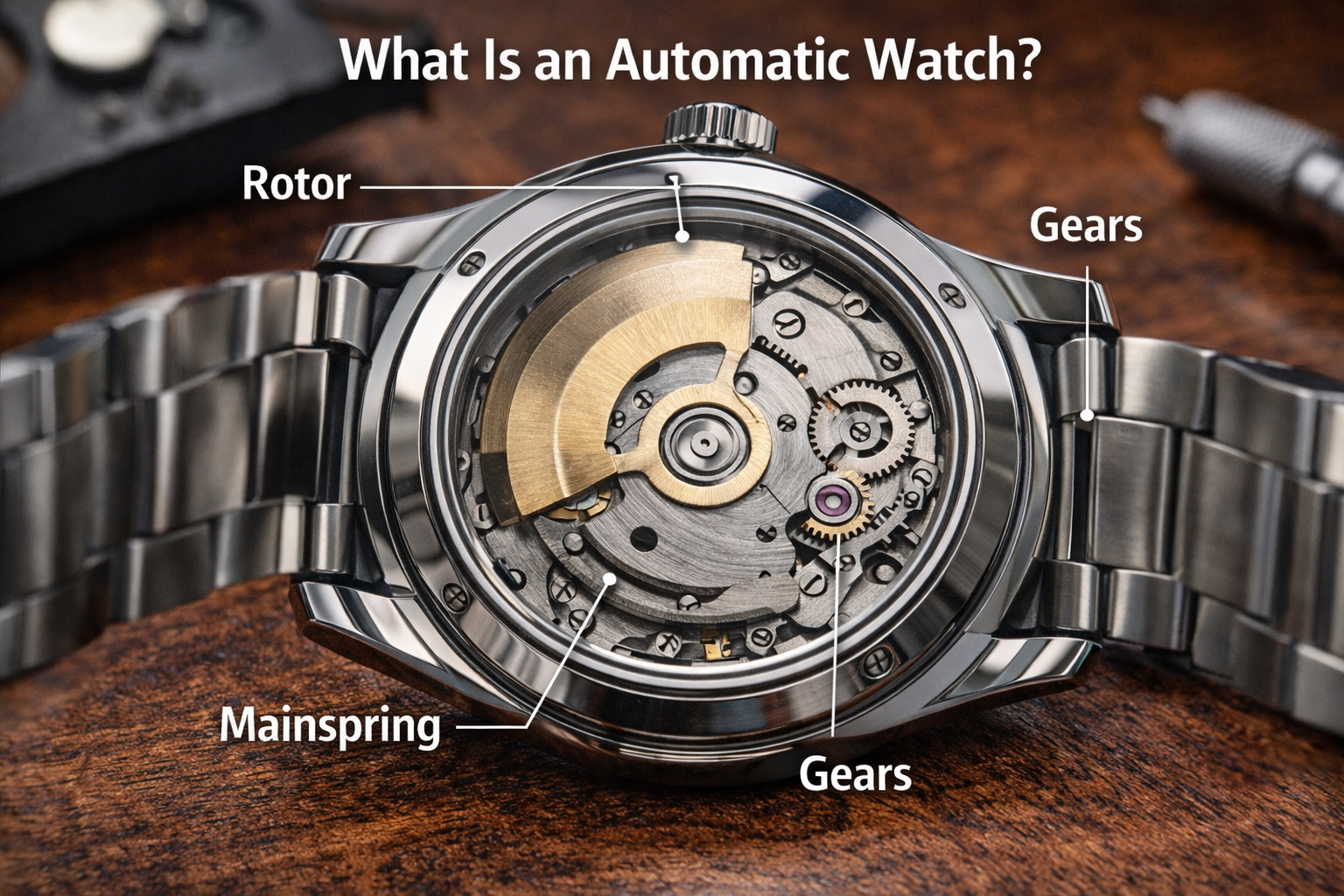
An automatic watch is a mechanical watch powered by the natural motion of the wearer’s wrist.
Inside the watch, a small rotor spins as the wrist moves. This spinning motion winds the mainspring, storing energy that powers the watch movement.
Key features of automatic watches include:
-
Mechanical movement
-
No battery required
-
Smooth sweeping second hand
-
Traditional watchmaking craftsmanship
Because they rely on mechanical components, automatic watches often appeal to collectors and enthusiasts.
What Is a Quartz Watch?
A quartz watch uses a battery-powered electronic movement.
When electricity from the battery passes through a small quartz crystal, it vibrates at a precise frequency. These vibrations regulate the movement of the watch hands.
Common characteristics of quartz watches include:
-
Battery powered movement
-
Extremely accurate timekeeping
-
Lower maintenance requirements
-
More affordable production
Quartz watches became widely popular because they are reliable, accurate, and easy to maintain.
Accuracy Comparison
One of the biggest differences between automatic and quartz watches is accuracy.
Quartz watches are significantly more accurate than mechanical watches because the quartz crystal oscillates at a stable frequency.
Typical accuracy:
Automatic watches:
±20 to ±40 seconds per day
Quartz watches:
±15 seconds per month
For people who prioritize precise timekeeping, quartz watches are often the better choice.
Maintenance and Servicing
Maintenance is another key difference between the two watch types.
Automatic watches require occasional servicing because they contain many small mechanical parts that experience wear over time. Servicing is usually recommended every 5 to 7 years.
Quartz watches require much less maintenance. The main task is replacing the battery every few years.
For people who prefer a low-maintenance watch, quartz watches are generally more convenient.
Use: Which Watch Is Better for Daily Wear?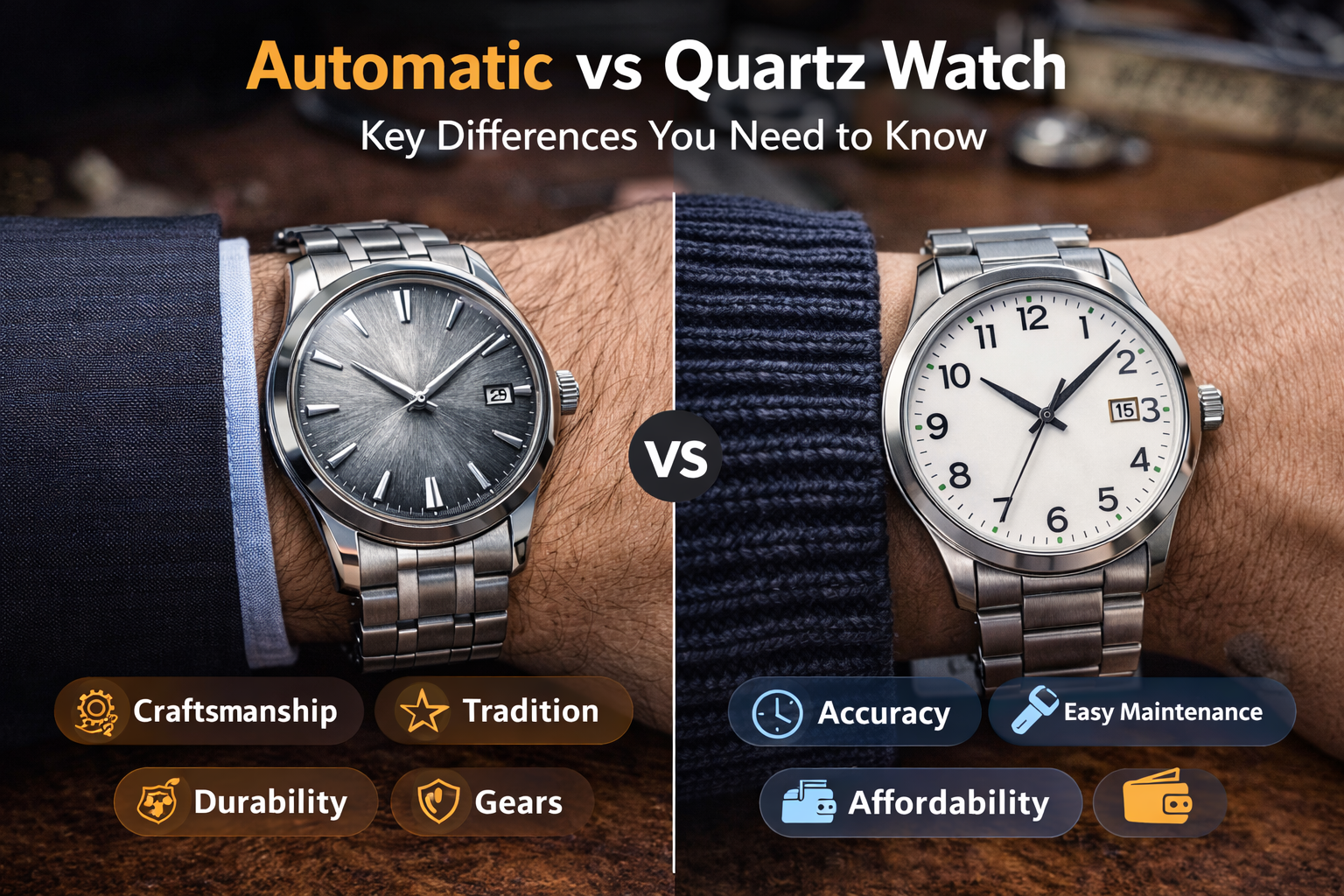
Automatic Watches for Everyday Style
Automatic watches are often chosen for their craftsmanship and traditional design.
They are commonly worn in situations such as:
-
Business meetings
-
Office environments
-
Formal occasions
-
Social events
Many people enjoy wearing automatic watches because they represent traditional watchmaking and mechanical engineering.
Quartz Watches for Practical Use
Quartz watches are ideal for people who prioritize convenience and reliability.
They are often used for:
-
Daily casual wear
-
Sports and outdoor activities
-
Travel and commuting
-
Work environments requiring precise timing
Because quartz watches require minimal maintenance, they are a practical option for everyday use.
Learn: Choosing the Right Watch for Your Lifestyle
When to Choose an Automatic Watch
An automatic watch may be the better choice if you:
-
Appreciate mechanical craftsmanship
-
Enjoy traditional watchmaking
-
Want a smooth sweeping second hand
-
Like the idea of a battery-free watch
Automatic watches often provide a stronger emotional connection to the art of watchmaking.
When to Choose a Quartz Watch
A quartz watch may be more suitable if you:
-
Want extremely accurate timekeeping
-
Prefer low maintenance
-
Need a reliable daily watch
-
Want a more affordable option
Quartz watches focus on practicality and precision.
Pros and Cons
Automatic Watch
Pros
✔ Traditional mechanical craftsmanship
✔ No battery required
✔ Smooth sweeping second hand
✔ Long lifespan with proper care
Cons
✖ Less accurate than quartz
✖ Requires periodic servicing
✖ Usually more expensive
Quartz Watch
Pros
✔ Highly accurate timekeeping
✔ Low maintenance
✔ Affordable price range
✔ Lightweight and durable
Cons
✖ Requires battery replacement
✖ Less mechanical complexity
✖ Not as appealing to collectors
Final Thoughts
Both automatic and quartz watches offer unique advantages. The best choice ultimately depends on your lifestyle and personal preferences.
Automatic watches are admired for their craftsmanship and mechanical beauty, while quartz watches provide unmatched accuracy and convenience.
If you value tradition and engineering, an automatic watch may be the better choice. If you prioritize practicality and precision, a quartz watch will likely suit your needs better.
Either way, choosing a well-designed watch can add both function and style to your everyday life.
FAQ
Are automatic watches better than quartz watches?
Not necessarily. Automatic watches offer traditional craftsmanship, while quartz watches provide greater accuracy and lower maintenance.
How long do automatic watches last?
With proper servicing and care, automatic watches can last for several decades.
Why are quartz watches more accurate?
Quartz watches use a vibrating quartz crystal regulated by electronic circuits, which produces a highly stable frequency for timekeeping.
Do automatic watches need batteries?
No. Automatic watches are powered by the motion of the wearer’s wrist, which winds the internal mainspring.