Watch Materials Guide: Stainless Steel vs Sapphire vs Ceramic
Watch Materials Guide: Stainless Steel vs Sapphire vs Ceramic
When choosing a watch, most people focus on design and movement. However, the materials used in a watch are just as important.
The right materials determine:
-
Durability
-
Scratch resistance
-
Comfort
-
Long-term value
Whether you are buying your first watch or upgrading to a better one, understanding materials will help you make a smarter decision.
If you are still deciding what kind of watch fits your lifestyle, you may want to read:
👉 Best Watches for Everyday Wear: Complete Buying Guide
This guide explains how materials, comfort, and design affect everyday usability.
Why Watch Materials Matter
Watch materials affect both performance and appearance.
A well-built watch should:
-
Resist scratches
-
Handle daily wear
-
Maintain its appearance over time
For example, watches designed for active use often use stronger materials. You can see this clearly in:
👉 Best Dive Watches: Complete Guide for Beginners
Dive watches are built with durable materials to withstand water pressure and harsh environments.
Common Watch Case Materials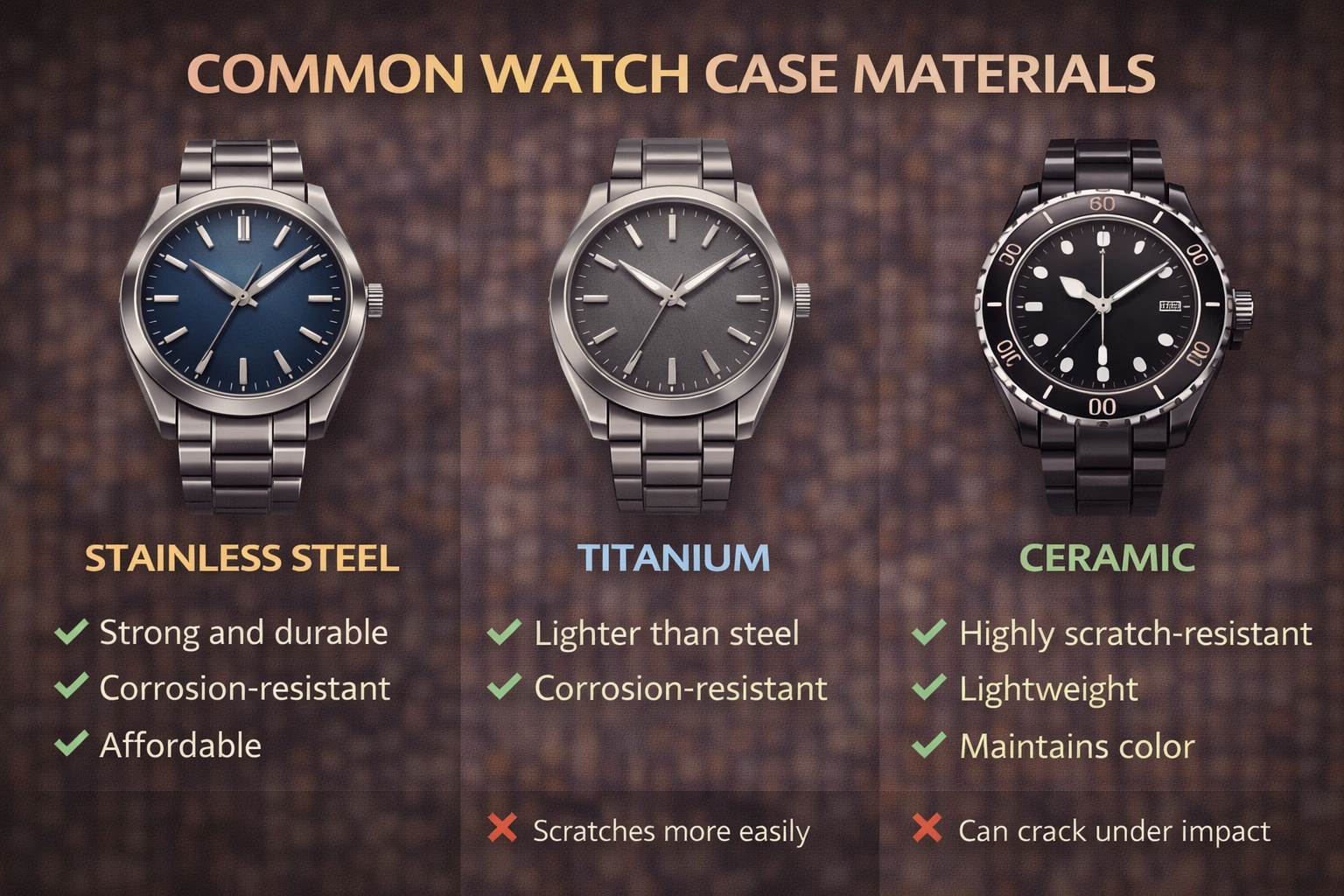
Stainless Steel
Stainless steel is the most common watch case material.
Advantages:
-
Strong and durable
-
Resistant to corrosion
-
Affordable
-
Suitable for everyday use
Because of its balance between durability and cost, stainless steel is widely used in both casual and professional watches.
Titanium
Titanium is a lightweight alternative to stainless steel.
Advantages:
-
Lighter than steel
-
Strong and corrosion-resistant
-
Comfortable for long wear
However, titanium is usually more expensive and can scratch more easily than hardened steel.
Ceramic
Ceramic is a premium material used in modern watches.
Advantages:
-
Highly scratch-resistant
-
Lightweight
-
Maintains color over time
Disadvantages:
-
Can crack under strong impact
-
Higher cost
Ceramic is often used in high-end watches for its sleek appearance and durability.
Watch Crystal Materials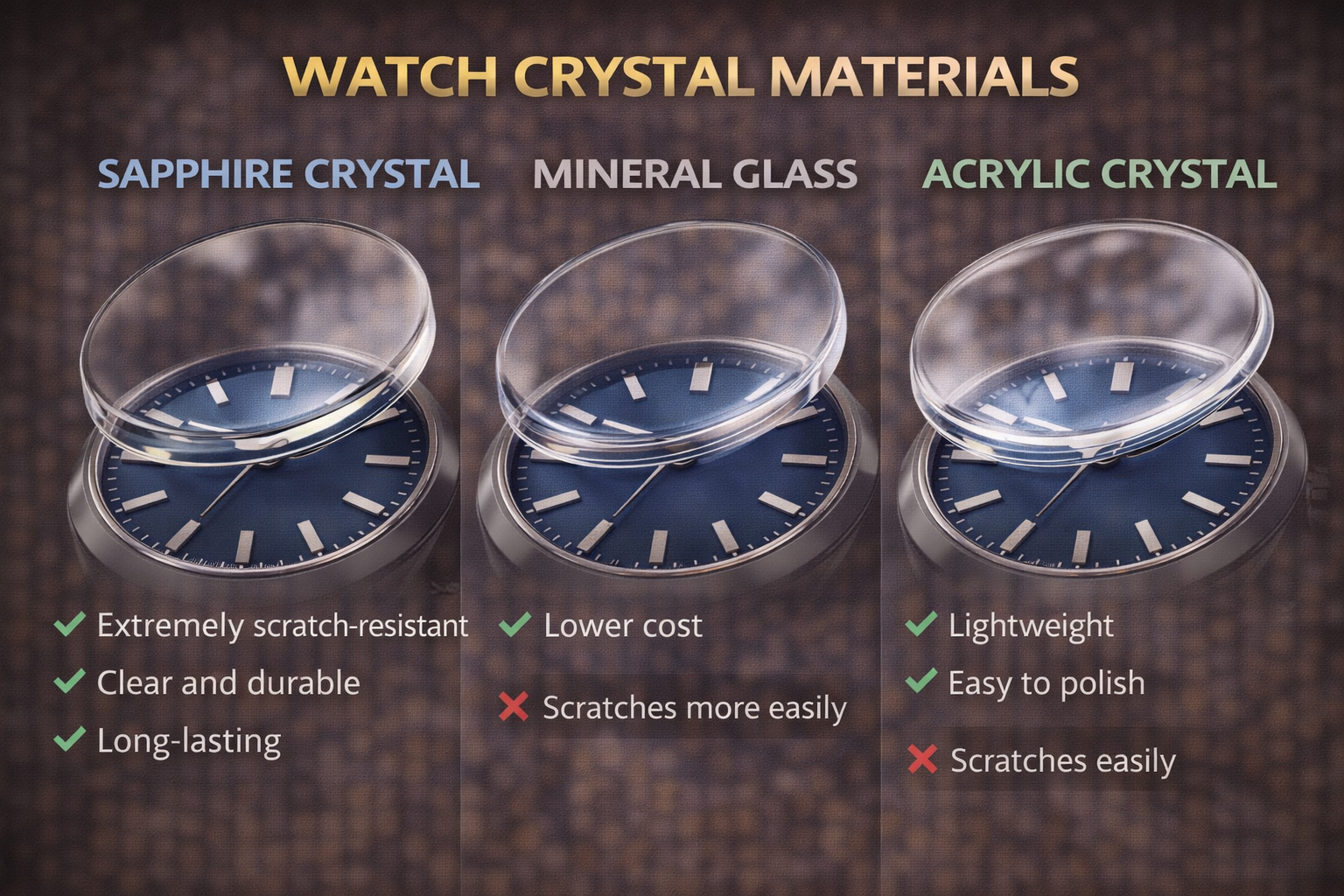
The crystal is the transparent cover over the watch dial.
Sapphire Crystal
Sapphire crystal is considered the best option.
Advantages:
-
Extremely scratch-resistant
-
Clear and durable
-
Long-lasting
Most high-quality watches use sapphire crystal.
Mineral Glass
Mineral glass is more affordable but less durable.
Advantages:
-
Lower cost
-
Decent scratch resistance
Disadvantages:
-
Scratches more easily than sapphire
Acrylic Crystal
Acrylic is the least durable option.
Advantages:
-
Lightweight
-
Easy to polish
Disadvantages:
-
Scratches easily
How Materials Affect Watch Size and Feel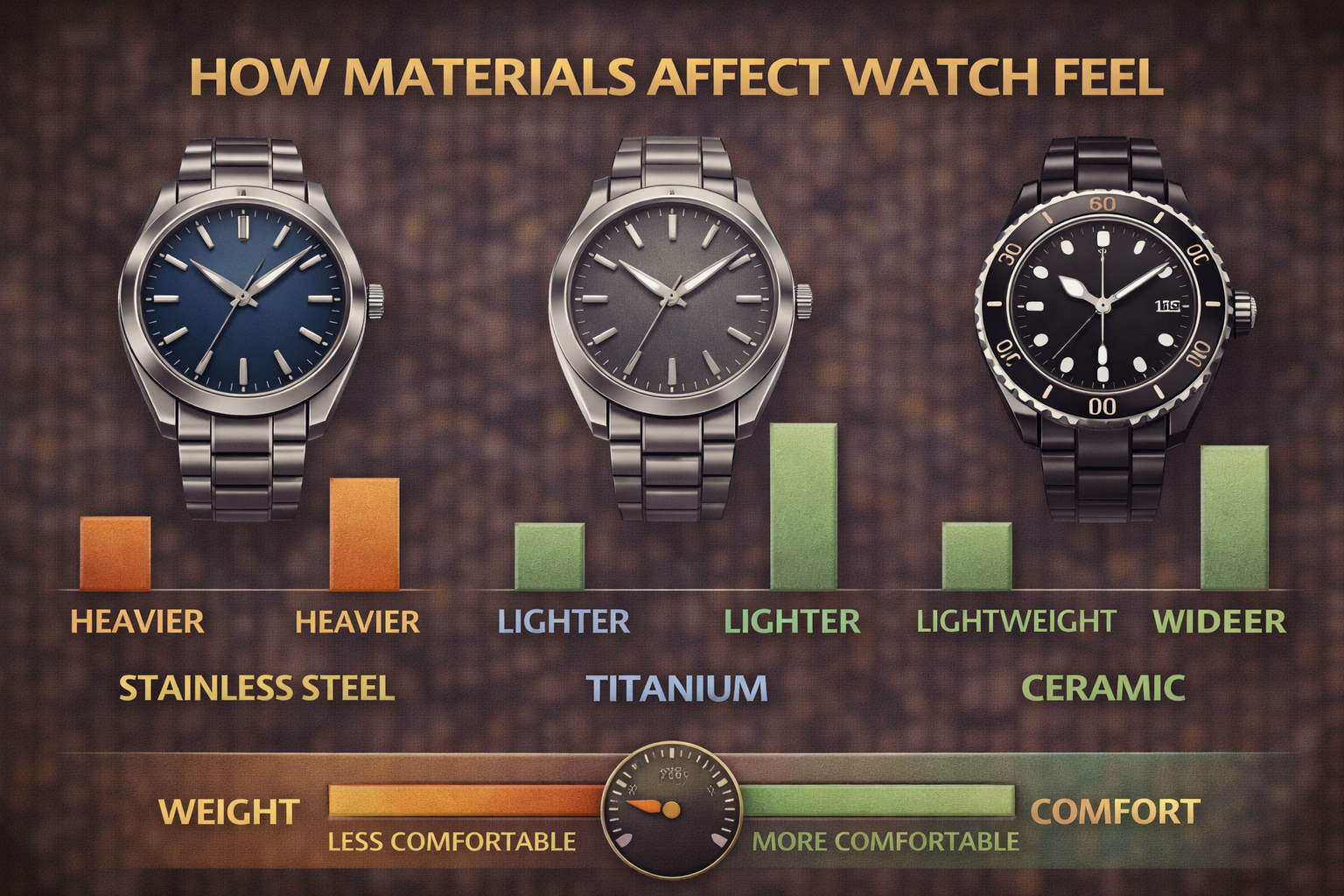
The materials used in a watch can affect both size and comfort.
For example:
-
Steel watches feel heavier
-
Titanium watches feel lighter
-
Automatic watches may feel thicker due to internal components
If you want to understand how size impacts comfort, read:
👉 Watch Case Size Guide: How to Choose the Right Watch Size
This guide explains how case size, thickness, and wrist fit work together.
Materials and Watch Movement
The type of movement can also influence material choice.
Automatic watches often use more durable materials because they are designed for long-term use.
If you are still learning about movement types, see:
👉 How Automatic Watches Work: Complete Beginner Guide
This explains how mechanical components affect durability and design.
You can also compare movement types here:
👉 Automatic vs Quartz Watches: Which One Is Better for Everyday Wear
Quartz watches are often lighter and thinner, which can influence material selection.
How to Choose the Right Watch Material
When choosing a watch, consider:
Daily Use
For everyday wear:
-
Stainless steel + sapphire crystal is the best combination
Lightweight Comfort
If you prefer lighter watches:
-
Titanium is a great option
Scratch Resistance
For maximum scratch resistance:
-
Choose ceramic or sapphire crystal
Budget
For affordability:
-
Stainless steel + mineral glass
If you are looking for affordable watches with good materials, check:
👉 Best Automatic Watch Under $500: Complete Buying Guide
This guide highlights watches that balance price and durability.
FAQ
What is the best watch material?
Stainless steel combined with sapphire crystal is considered the best balance of durability and cost.
Is sapphire crystal worth it?
Yes. Sapphire crystal is highly scratch-resistant and lasts much longer than mineral glass.
Are ceramic watches durable?
Ceramic is very scratch-resistant but can crack under strong impact.
Is titanium better than stainless steel?
Titanium is lighter and more comfortable, but stainless steel is usually more scratch-resistant.
What material is best for everyday wear?
Stainless steel with sapphire crystal is ideal for daily use.