Watch Power Reserve Explained: How It Works and Why It Matters
Watch Power Reserve Explained: How It Works and Why It Matters
When choosing a mechanical or automatic watch, one important factor to consider is power reserve.
Power reserve determines how long your watch will continue running when it is not being worn.
Understanding this concept will help you:
- Choose the right watch
- Maintain accuracy
- Avoid your watch stopping unexpectedly
If you're new to automatic watches, you may want to first read:
👉 How Automatic Watches Work: Complete Beginner Guide
This guide explains how the rotor and mainspring generate and store energy.
What Is Power Reserve?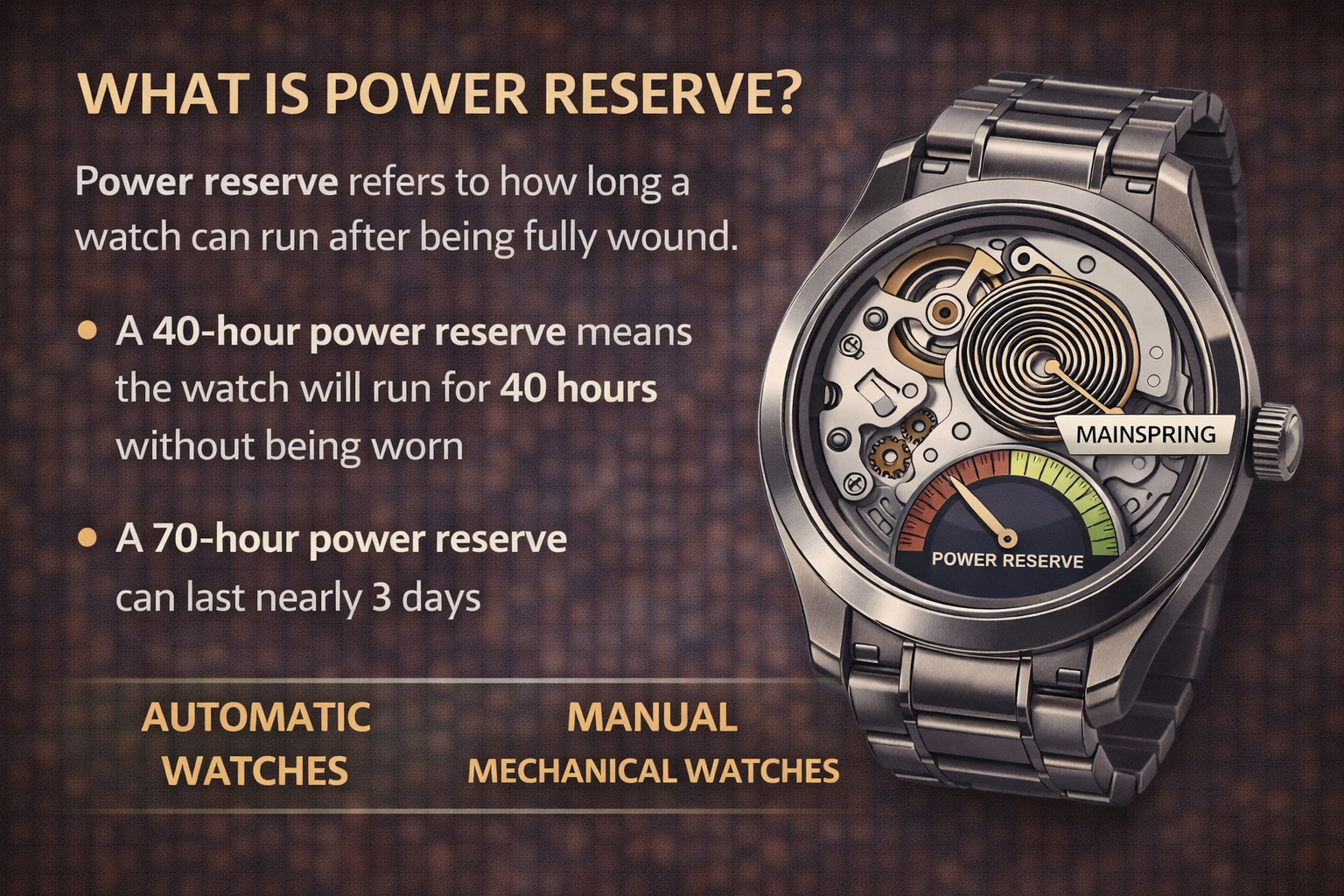
Power reserve refers to the amount of time a watch can run after being fully wound.
For example:
- A 40-hour power reserve means the watch will run for 40 hours without being worn
- A 70-hour power reserve can last nearly 3 days
Power reserve is mainly relevant for:
- Automatic watches
- Manual mechanical watches
Quartz watches do not rely on power reserve in the same way, since they use batteries.
If you want to understand the difference, see:
👉 Automatic vs Quartz Watches: Which One Is Better for Everyday Wear
How Power Reserve Works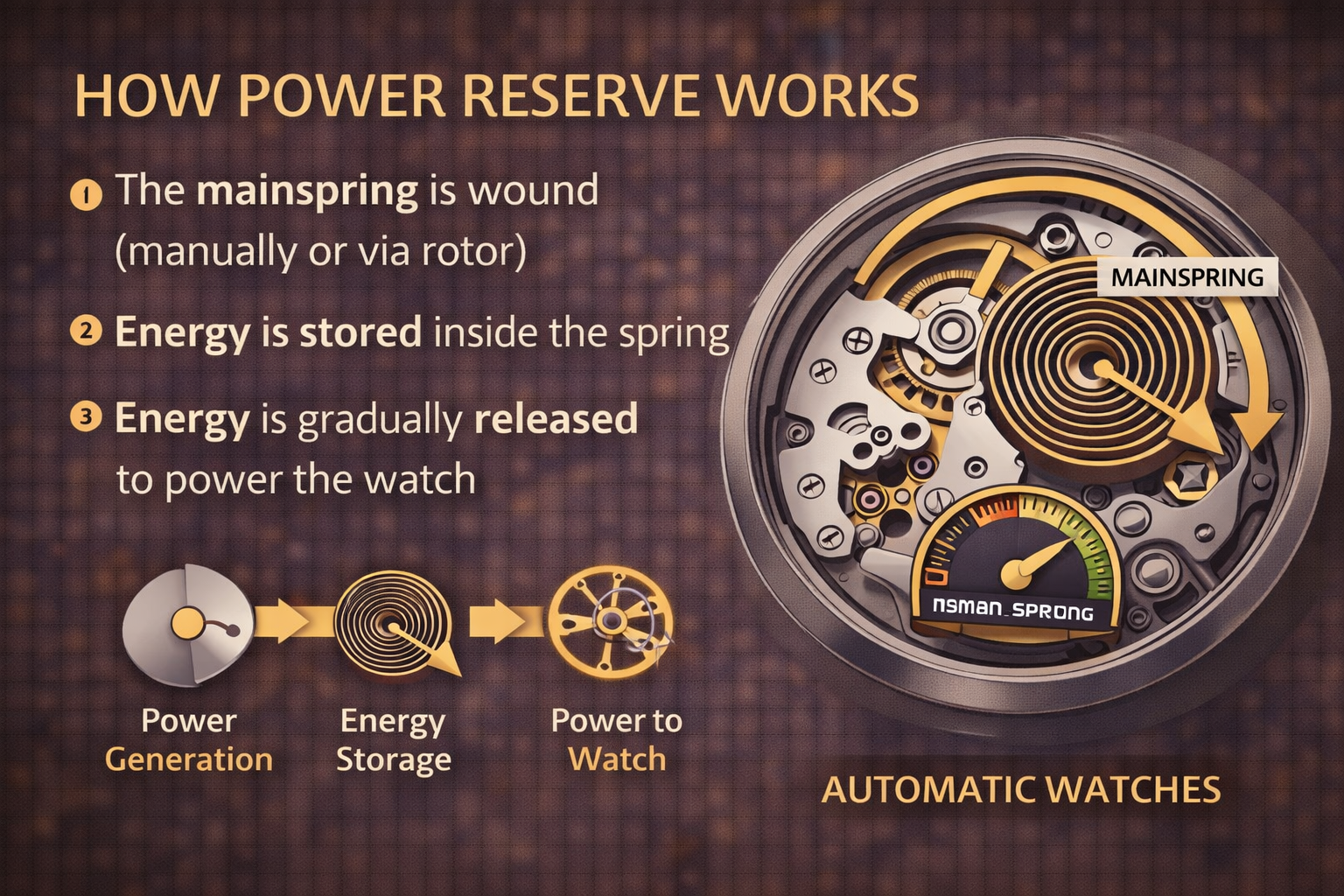
Power reserve is stored in a component called the mainspring.
Here’s how it works:
- The mainspring is wound (manually or via rotor)
- Energy is stored inside the spring
- Energy is gradually released to power the watch
In automatic watches:
- Wrist movement powers the rotor
- The rotor winds the mainspring
- The watch continuously stores energy
Typical Power Reserve Times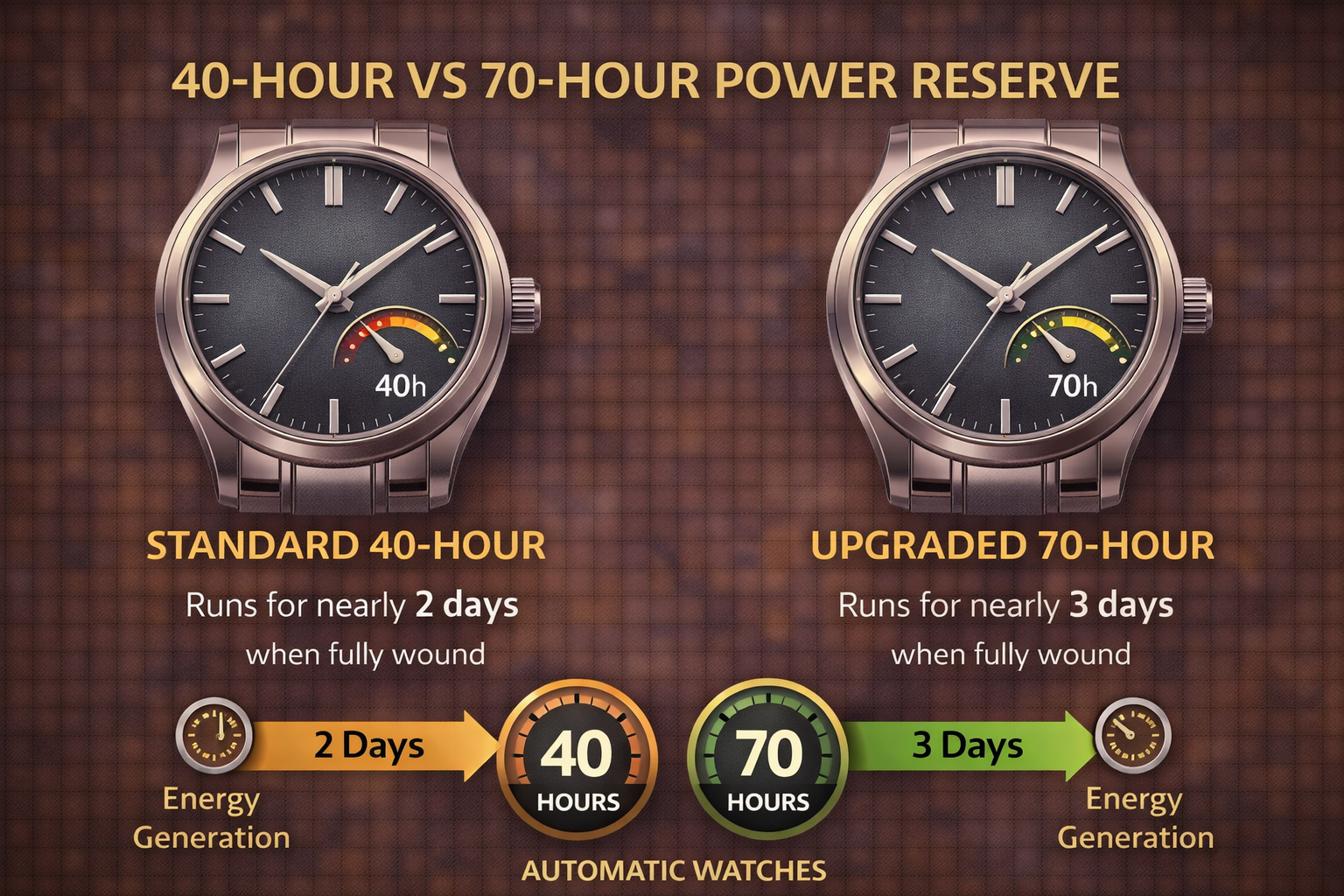
Most watches fall into these ranges:
- 36–42 hours → standard power reserve
- 48–72 hours → extended reserve
- 80+ hours → high-end watches
Longer power reserve is useful if you do not wear your watch every day.
Why Power Reserve Matters
Power reserve directly affects usability.
Daily Wear Convenience
If you wear your watch daily, even a 40-hour reserve is usually enough.
If you are choosing a daily watch, read:
👉 Best Watches for Everyday Wear: Complete Buying Guide/best-watches-for-everyday-wear
Weekend Use
A 70+ hour power reserve allows your watch to keep running over the weekend.
This is useful if you rotate between multiple watches.
Travel and Rotation
If you own multiple watches, longer power reserve reduces the need to reset time frequently.
Power Reserve vs Watch Type
Different types of watches offer different power reserve experiences.
Automatic Watches
- Powered by wrist movement
- Can run continuously when worn
- Typically 40–72 hours reserve
If you're looking for affordable options, see:
👉 Best Automatic Watch Under $500: Complete Buying Guide
Manual Mechanical Watches
- Require manual winding
- Usually have similar reserve times
- Often preferred by collectors
You can compare these here:
👉 Automatic Watch vs Mechanical Watch: What's the Difference?
Quartz Watches
- Powered by battery
- No traditional power reserve
- Long-lasting with minimal maintenance
How Power Reserve Affects Watch Design
Watches with longer power reserve may:
- Be slightly thicker
- Use more advanced movement design
- Cost more
If you're learning about how size and thickness affect comfort, read:
👉 Watch Case Size Guide: How to Choose the Right Watch Size
Does Power Reserve Affect Durability?
Not directly.
Durability depends more on materials and construction.
If you want to understand durable materials, see:
👉 Watch Materials Guide: Stainless Steel vs Sapphire vs Ceramic
For example:
- Dive watches focus on durability
- Power reserve is secondary
👉 Best Dive Watches: Complete Guide for Beginners
How Much Power Reserve Do You Need?
Here’s a simple guide:
- Daily wear → 40 hours is enough
- Occasional wear → 60–70 hours
- Watch collectors → 70+ hours
Your lifestyle determines the ideal choice.
FAQ
What is a good power reserve for a watch?
A good power reserve is typically 40 to 70 hours, depending on how often you wear the watch.
Do automatic watches need to be worn every day?
Not necessarily. However, wearing them regularly keeps them wound.
What happens when power reserve runs out?
The watch stops and needs to be wound or reset.
Is higher power reserve better?
Not always, but it adds convenience, especially for occasional wear.
Do quartz watches have power reserve?
No. Quartz watches use batteries instead of mechanical energy.